Guide
Signs of diabetes in dogs: what to look for and when to see a vet
The early signs of diabetes in dogs, how to check them at home, which signs mean see a vet today, what the vet will test, and the illnesses that can look the same.
Sunny, owner“I wish my dog lived as long as I do.”Updated

I'm an owner, not a vet. This is not veterinary advice, so check anything medical with your own vet.
Key facts
- The classic early signs are drinking much more, peeing much more, being hungrier than usual and losing weight anyway.
- Diabetes can't be confirmed by signs alone. A vet confirms it with blood and urine tests, and often repeats a high reading before deciding.
- If your dog is vomiting, won't eat, is weak or wobbly, or is breathing fast, call your vet today. These can be signs of an emergency called diabetic ketoacidosis.
- Cushing's disease, kidney disease, a urine infection and diabetes insipidus can all cause heavy drinking and peeing too.
- Cloudy eyes from cataracts are common in diabetic dogs and can come on quickly.
- Most dogs do well once diabetes is found and treated.
I never give insulin amounts here. Yours comes from your vet's written plan.
The first signs of diabetes in dogs
The signs that most often come first are simple: your dog drinks a lot more water than usual and needs to pee a lot more. You might notice the bowl empty sooner, more trips outside, bigger puddles, or accidents in the house from a dog who never has them.
Many dogs are also hungrier than normal but lose weight anyway. That happens because, without enough insulin, the body can't use the sugar from food properly, so it passes out in the urine and the dog burns fat and muscle instead. Some dogs also seem more tired or less keen on walks.
These changes can creep in over days or weeks, and each one is easy to explain away: hot weather, a cold spell, getting older, being greedy. If you see more than one of them together, it's worth a vet visit. Does this mean my dog has diabetes? explains what to do while you wait for the appointment.
How to check drinking and peeing at home
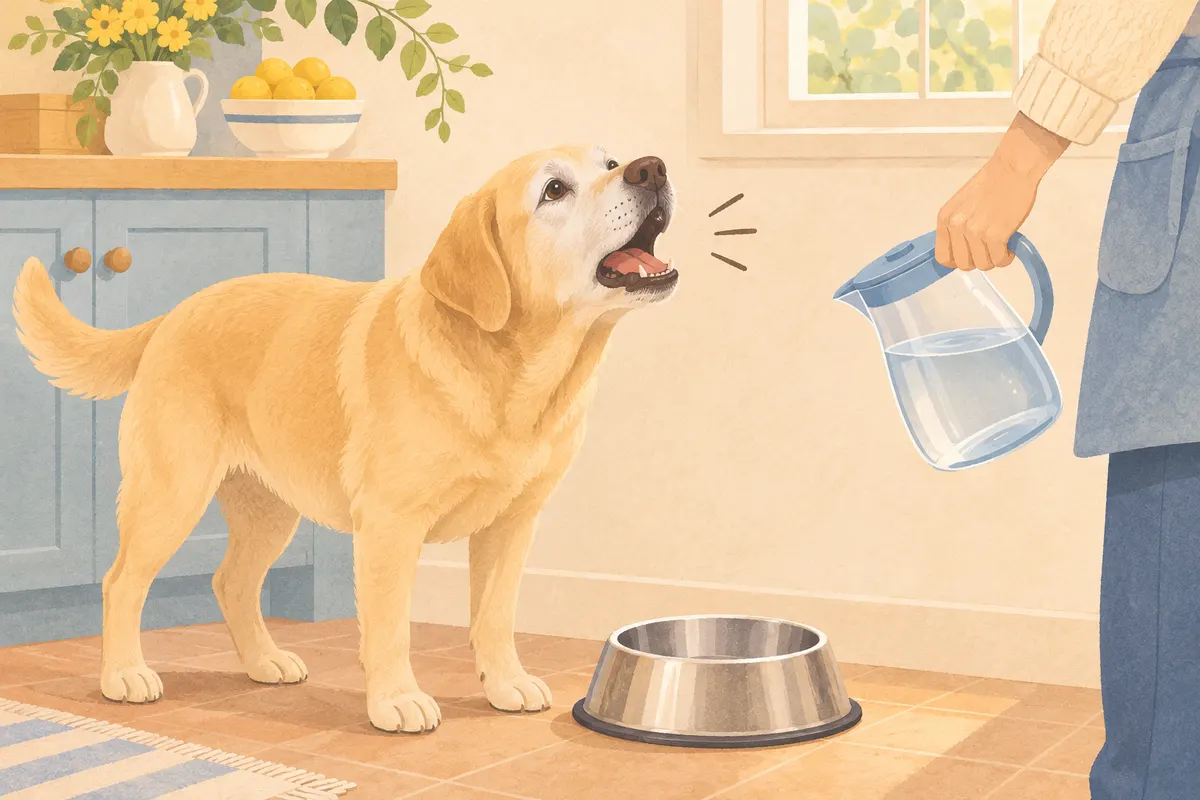
Your vet will ask how much more your dog is drinking and peeing, and "a lot" is hard to judge. For a couple of days, fill the bowl from the same jug each time and note how often you refill it. Write down roughly when your dog goes out to pee, whether the puddles look bigger or the pees take longer, and any accidents, especially at night.
Weigh your dog if you can, or note whether the ribs and hips feel more obvious. How to weigh a big dog at home shows an easy way. Take these notes to the vet, along with a fresh morning urine sample in a clean pot if your clinic asks for one.
Don't take water away to make the peeing stop. A dog with diabetes needs that water, and cutting it back can make him dangerously dehydrated. Why is my diabetic dog drinking so much? explains why the thirst happens.

Other signs that can show up
Some dogs are only diagnosed after something else brings them to the vet. Cloudy or bluish eyes can be cataracts, which are common in diabetic dogs and can develop quickly. My diabetic dog is going blind covers what that means day to day.
Repeated urine infections, skin or ear infections that keep coming back, a dull coat, and weakness in the back legs can all be linked to diabetes too. Could a urine infection be part of this? and Weak back legs or neuropathy go into these.
Weight loss with a big appetite is a sign worth taking seriously on its own. My diabetic dog is losing weight explains what vets look for.
Signs that mean see a vet today
Call your vet today, or an emergency clinic if yours is closed, if your dog is drinking and peeing more and is vomiting, won't eat, is weak or wobbly, seems very flat, is breathing fast, or has breath that smells sweet or like nail-polish remover. These can be signs of diabetic ketoacidosis (DKA), where the body starts breaking down fat so fast that the blood turns acidic. It is an emergency and needs treatment in hospital.
If your dog seems well apart from drinking and peeing more, book a vet visit within the next few days rather than waiting for the next routine check. The emergency page lists what to say on the phone and what to take with you.
What the vet will test
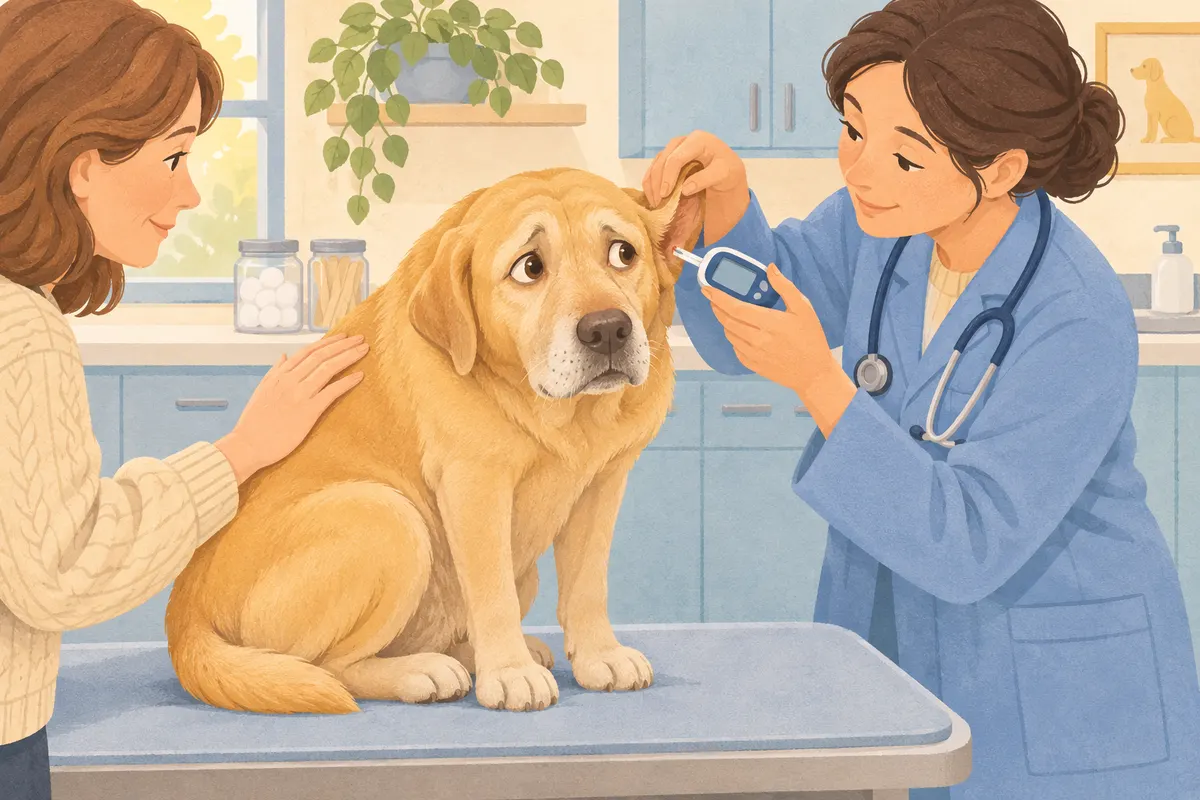
Your vet can't confirm diabetes from the signs alone. They will usually check your dog's blood sugar (glucose) and test a urine sample for sugar and for ketones, which show the body is burning fat. Diabetes is confirmed when the blood sugar stays high and there is sugar in the urine, together with the signs.
Many vets also run a full blood panel, to check the liver and kidneys and look for illnesses that come with diabetes or look like it. Some add a fructosamine test, which shows roughly what the blood sugar has averaged over the past couple of weeks. A single high reading isn't always enough, so the vet may repeat it, sometimes after an overnight fast. What tests confirm diabetes, and what do the results mean? explains each result.
Ask your vet which results confirm diabetes and which tests are ruling other things out, and ask for copies to keep.
Illnesses that can look like diabetes
Heavy drinking and peeing have several possible causes, which is why your vet tests before naming one. Cushing's disease (too much of the stress hormone cortisol) also causes thirst, peeing, hunger and often heavy panting, and it can come along with diabetes: see My dog has diabetes and Cushing's.
Kidney disease can cause thirst and peeing, often with weight loss and a poor appetite. A urine infection can make a dog pee more often, sometimes with accidents or straining. Diabetes insipidus is a different, rarer condition with huge thirst and very dilute urine but no high blood sugar: see What is diabetes insipidus?. Panting at rest is worth mentioning to your vet too; My diabetic dog is panting or restless at night covers why.
If it turns out to be diabetes
Hearing the word diabetes is frightening, but most dogs do well once it's found. Treatment usually means insulin injections and meals at regular times, and the routine gets easier within a few weeks. Why did my dog get diabetes? answers the question most owners ask first, and some breeds are more likely to get it.
The guide to the first weeks with a diabetic dog walks through what happens next, from the written plan your vet gives you to the first check-up.
Signs alone can't tell you it's diabetes. Write down what you're seeing for a couple of days and take those notes to your vet, and call today if your dog is vomiting, won't eat or seems weak.
Sources
- Does this mean my dog has diabetes?What to do while you wait for the vet visit
- Why is my diabetic dog drinking so much?Why high blood sugar causes thirst and peeing
- What tests confirm diabetes, and what do the results mean?Blood and urine tests vets use to confirm it
- My dog has diabetes and Cushing's. How does that work?How Cushing's looks similar and can come with diabetes
- What is diabetes insipidus and how is it different?A different condition with heavy thirst
- My diabetic dog is going blindCataracts and cloudy eyes in diabetic dogs
- Emergency or low blood sugar: call your vet nowSigns that need a vet today
Every outside source I used is listed on the Sources page.
Related
Q&A
Does this mean my dog has diabetes?
Drinking more, peeing more and losing weight mean it's time to see a vet. Only the vet can tell you if it's diabetes.
Q&A
What tests confirm diabetes, and what do the results mean?
Your vet confirms diabetes with blood and urine tests, and one home reading isn't enough.
Guide
Starting out with a diabetic dog
From the diagnosis to a settled routine: what the tests mean, what to ask before you go home, how insulin and supplies work, and what the first weeks really look like.
Guide
When the day goes wrong: urgent help
The signs that mean you should call your vet straight away.